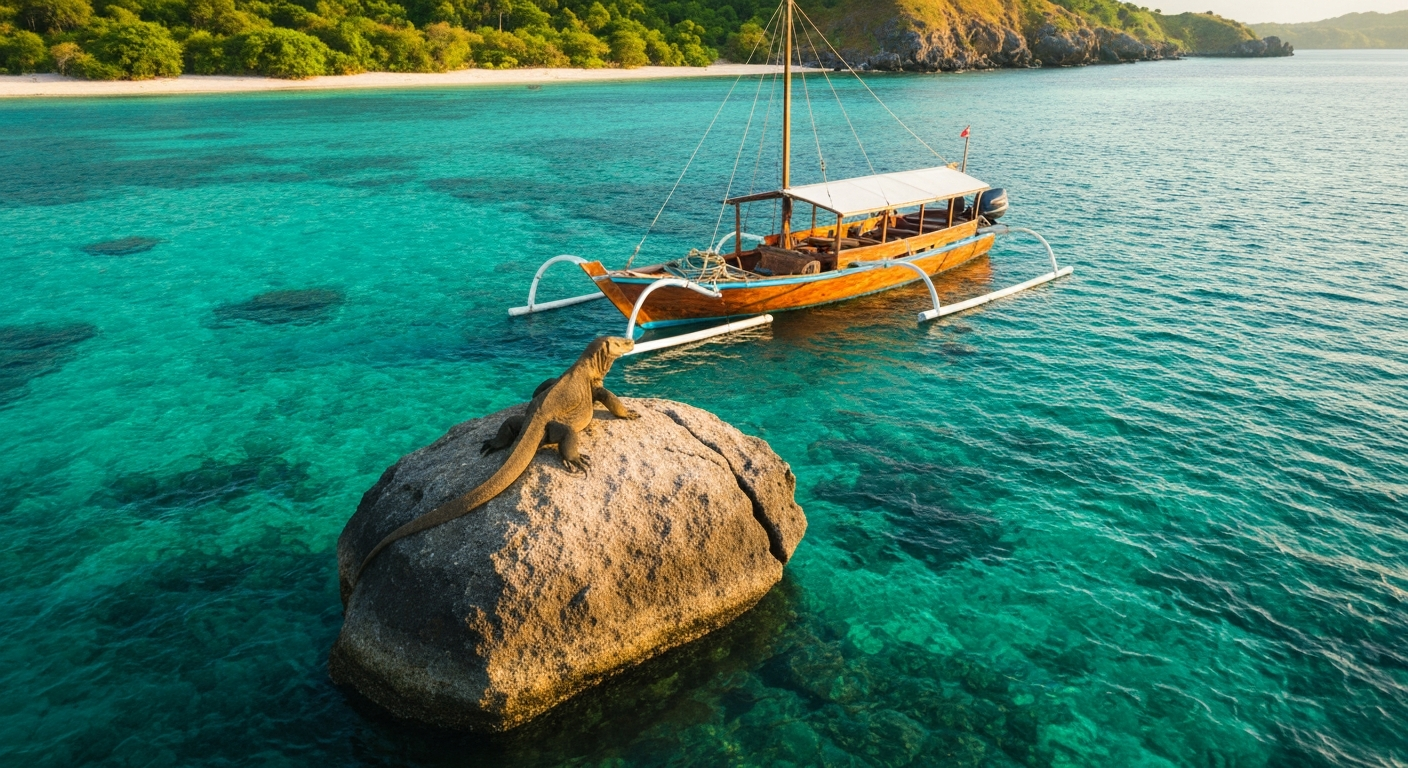
Komodo National Park, a UNESCO World Heritage site since 1991, attracts thousands of international visitors annually, drawn by its unique wildlife and marine ecosystems. Travelers typically access the park through one of two primary methods: a multi-day liveaboard sailing tour or a land-based stay in Labuan Bajo combined with day trips. The “komodo island sailing tour 3 days 2 nights” option remains highly popular, registering approximately 700 global monthly searches. Understanding the distinctions between these travel styles is crucial for planning an effective visit to this remote Indonesian archipelago. Both approaches offer distinct advantages depending on traveler preferences, budget, and desired immersion level.
Understanding Komodo Liveaboard Tours
A Komodo liveaboard tour involves staying overnight on a boat, typically a traditional Indonesian Phinisi, while cruising through Komodo National Park. These tours are designed to maximize time within the park, allowing access to remote islands and dive sites that are not feasible for day trips. Most liveaboards depart from Labuan Bajo, a port town on Flores island, as indicated by approximately 600 monthly searches for “komodo island liveaboard tour from labuan bajo”. Common durations include 3 days and 2 nights (3D2N) or 4 days and 3 nights (4D3N), with the latter seeing around 220 monthly searches for “komodo island sailing tour itinerary 4d3n”.
Liveaboards provide a comprehensive experience, bundling accommodation, meals, and activities into a single package. Shared tours for 3D2N typically cost between USD 270 and USD 800 per person, depending on the boat’s age, cabin amenities like air conditioning, and maximum passenger capacity (ranging from 10 to 20 guests). Private charters cater to groups, with mid-range Phinisi boats for 8–12 passengers costing USD 3,500–7,000 total for a 3D2N trip. These vessels often include private bathrooms and better catering, addressing decision drivers for couples and friends groups seeking comfort and privacy.
The Appeal of Land-Based Resorts in Labuan Bajo
Land-based resort stays involve booking accommodation in Labuan Bajo and arranging separate day trips into Komodo National Park. Labuan Bajo serves as the primary hub for all Komodo-related tourism. This option suits travelers who prefer sleeping on solid ground each night or those with limited time. Day trips are almost exclusively conducted via speedboat to cover the distances efficiently. “Private komodo island speedboat tour one day” accounts for approximately 200 global monthly searches, highlighting demand for single-day park visits.
These day trips typically visit key park attractions such as Komodo Island, Padar Island, and Pink Beach within a single day. Prices for shared day trip speedboats range from USD 90 to USD 190 per person, varying based on group size, catering quality, and inclusion of hotel pickup. While offering less immersion than a liveaboard, land-based options provide more flexibility for evening activities in Labuan Bajo, including dining at local restaurants or enjoying sunset views from hilltops. This approach often appeals to travelers integrating Komodo into a broader Indonesia trip, such as a 2–3 week itinerary that includes Bali.
Komodo Island Sailing Tour Itineraries: What to Expect
Regardless of whether one chooses a liveaboard or a day trip, most Komodo Island sailing tours follow a similar core itinerary, targeting the region’s iconic sights. A popular search query, “komodo island sailing tour pink beach manta point”, indicates interest in key natural attractions. Standard itineraries include visits to Komodo Island or Rinca Island to observe Komodo dragons, trekking to Padar Island for panoramic viewpoints, and snorkeling or relaxing at Pink Beach. Many tours also incorporate a stop at Manta Point for snorkeling with manta rays, and Taka Makassar, a unique sandbar.
Liveaboard tours, particularly 3D2N and 4D3N options, offer more extensive exploration. They can reach additional snorkeling or dive sites like Kanawa Island, Siaba Besar, or Batu Bolong. The pace is generally more relaxed, allowing for multiple visits to sites or extended time for activities. Day trips are more constrained by time, focusing on hitting the major highlights efficiently. For those interested in seeing Komodo dragons, the decision between visiting Rinca or Komodo Island is a consideration, with “komodo dragon tour rinca vs komodo island” generating about 150 monthly searches. Rinca typically offers a higher chance of dragon sightings due to its smaller size, though Komodo Island presents a more traditional trekking experience.
Pricing and Budget Considerations for Your Komodo Adventure
Understanding the “komodo sailing tour 2026 price” is a crucial factor for many travelers, with this query attracting around 450 monthly searches. Pricing varies significantly based on tour duration, boat type, and level of luxury. Shared 3D2N liveaboards range from an entry-level USD 270–360 per person (basic fan cabins, shared bathrooms) to upper-mid options at USD 550–800 per person (newer boats, A/C cabins, smaller groups). Dive-focused liveaboards, typically 4D3N or 5D4N with 12-18 dives, cost USD 900–2,500 per person, reflecting specialized equipment and dive master services.
Private charters offer more exclusivity but at a higher price point. A basic wooden boat for 6–12 passengers on a 3D2N trip costs USD 1,200–2,000 total, while a modern mid-range Phinisi is USD 3,500–7,000 total. Luxury yachts command USD 8,000–20,000+ for a 3D2N package, including premium amenities like gourmet chefs and concierge services. All prices are typically exclusive of Komodo National Park fees, which range from IDR 300,000 to IDR 850,000 (approximately USD 20-55) per person per day, depending on activities. These fees cover entrance, trekking, snorkeling, and ranger services, as detailed by [Indonesia.travel](https://www.indonesia.travel/gb/en/destinations/bali-nusa-tenggara/labuan-bajo/komodo-national-park).
Best Time to Visit Komodo and Safety Factors
The “best time for komodo island sailing tour” is a key planning consideration, generating approximately 350 monthly searches. The dry season, from April to December, is generally considered ideal. During these months, the weather is sunny, and sea conditions are calmer, which is favorable for sailing, snorkeling, and diving. The wet season, from January to March, can bring heavier rainfall and choppier seas, though tours still operate. Specific queries like “komodo island sailing tour december january” suggest interest in shoulder or wet season travel, which might offer fewer crowds but potentially less predictable weather.
Safety is a paramount concern for all travelers, especially for families and divers. Reputable liveaboard operators adhere to strict safety standards, including regular boat maintenance, provision of life jackets for all passengers (including children), and clear safety briefings. Dive liveaboards specifically provide essential gear like oxygen, radios, and tender boats, alongside certified PADI/SSI instructors and appropriate guide-to-diver ratios. For families, selecting a boat with child safety features like railings and flexible timetables is important. The Indonesian Ministry of Tourism and Creative Economy (Kemenparekraf) emphasizes safety protocols for marine tourism, as outlined on their official site [kemenparekraf.go.id](https://www.kemenparekraf.go.id/en/news/komodo-national-park-reopens-with-health-protocols).
Targeting Specific Traveler Needs: Who Chooses Which Option?
The choice between a liveaboard and a land-based resort often aligns with specific traveler profiles and their priorities. Couples aged 25–40, ranging from backpackers to mid-range budgets (USD 350–700 per person for 3D2N shared Phinisi), often prioritize seeing Komodo dragons, Padar, Pink Beach, and Manta Point in one itinerary. They also value cabin privacy, air conditioning, and private bathrooms if their budget exceeds USD 500. A shared liveaboard tour usually satisfies these requirements, offering a comprehensive experience.
Friends groups (3–8 people) with budgets of USD 3,000–8,000 for a private 3D2N–4D3N boat charter often seek a private liveaboard for control over the “vibe,” alcohol policy, music, and specific stops like Taka Makassar for drone photography. Dive-focused travelers, often solo or pairs, with budgets of USD 900–2,500 per person for 4–7 night liveaboards, exclusively choose dive liveaboards. Their decision drivers include PADI/SSI credentials, Nitrox availability, and specific dive sites like Castle Rock or Manta Alley. “Komodo national park liveaboard diving trip” garners approximately 200 monthly searches.
Families (late 30s–50s parents with kids 7–16) typically prefer private mid-range boats (USD 4,000–10,000 for 3D2N–4D3N) to ensure child safety features, flexible timetables, and less extreme currents. “Family friendly komodo sailing tour” sees about 100 monthly searches. High-net-worth individuals, with budgets upwards of USD 8,000–25,000+ for a full yacht charter, opt for luxury Phinisi or modern yachts featuring ensuite bathrooms, private chefs, and concierge-style planning. For beginners interested in marine life, “komodo liveaboard for beginners snorkel only” (around 80 monthly searches) points to a demand for dedicated snorkeling experiences, which liveaboards excel at providing.
Liveaboard vs. Land-Based Resort: A Comparative Overview
Choosing the right mode of travel significantly shapes the Komodo experience. Each option presents distinct advantages and limitations regarding immersion, comfort, and cost.
-
Accommodation: Liveaboards provide on-water cabins; land-based resorts offer hotel rooms in Labuan Bajo.
-
Itinerary Flexibility: Liveaboards offer greater flexibility in scheduling stops and activities, allowing for multiple visits or extended periods at sites. Day trips follow fixed, time-sensitive itineraries.
-
Immersion: Liveaboards offer continuous immersion in the national park, including sunrises and sunsets over the islands. Land-based options provide nightly returns to urban amenities.
-
Cost Structure: Liveaboards typically include meals and activities in the per-person or whole-boat price. Land-based options separate accommodation costs from day trip prices and meals.
-
Activities: Liveaboards facilitate multi-day diving or extensive snorkeling. Day trips focus on primary trekking and snorkeling sites due to time constraints.
-
Privacy: Private liveaboard charters offer unmatched privacy. Shared liveaboards offer cabin privacy. Resorts provide hotel room privacy, but day trips are often shared experiences.
-
Travel Pace: Liveaboards generally offer a more relaxed pace. Day trips are fast-paced to cover maximum ground within a single day.
-
Food: Liveaboards provide meals prepared on board. Land-based travelers access diverse dining options in Labuan Bajo.
-
Accessibility: Liveaboards reach more remote areas of the park. Day trips are limited to sites accessible within a few hours’ return journey to Labuan Bajo.
The decision between a Komodo liveaboard sailing tour and a land-based resort stay depends on individual priorities for comfort, budget, and the desired depth of exploration. Liveaboards offer unparalleled immersion and access to the full scope of Komodo National Park’s wonders, ideal for those seeking an all-encompassing marine adventure. Land-based resorts provide a comfortable base in Labuan Bajo, suitable for travelers who prefer nightly returns to land or have less time. Both options offer unique ways to experience this incredible destination. Explore our diverse range of Komodo tours to find the perfect fit for your next adventure.