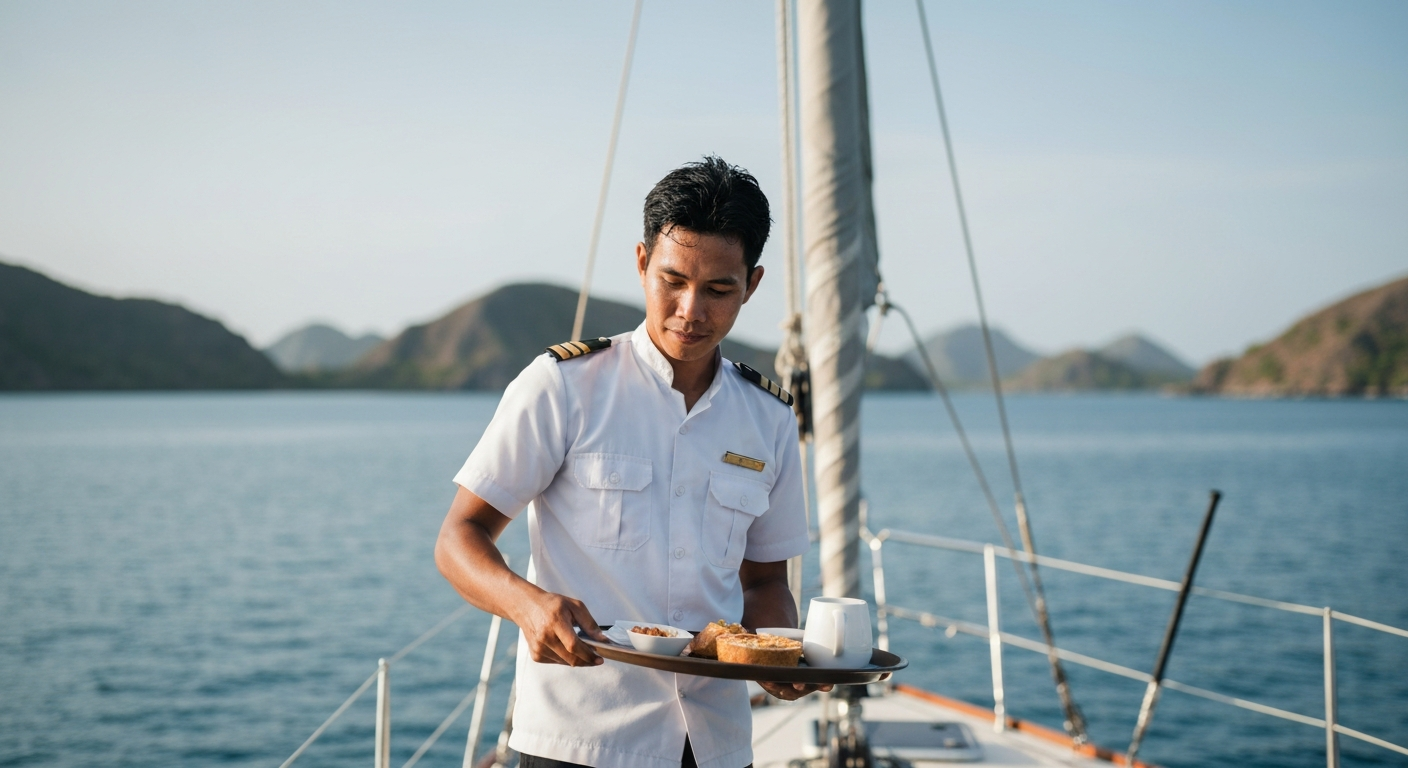
Komodo Island sailing tours provide access to Komodo National Park, a designated UNESCO World Heritage Site since 1991. The operational integrity and safety of these expeditions rely on stringent crew certifications and adherence to comprehensive safety protocols. Indonesia’s Directorate General of Sea Transportation mandates specific licensing for all maritime personnel operating commercial vessels within its waters, including the Flores Sea. Operators offering Komodo Island sailing tours must ensure their captains hold at least a Master Class III or IV license, alongside certifications in basic safety training (BST) and crowd management. This regulatory framework aims to protect the approximately 200,000 annual visitors to the region, ensuring a secure experience amidst the park’s dynamic marine environment. [Source: UNESCO](https://whc.unesco.org/en/list/609) and [Source: Kemenhub](https://hubla.dephub.go.id/ppl/Pages/Peraturan-Pelayaran.aspx).
Indonesian Maritime Licensing and Training Standards
All crew members operating vessels for Komodo Island sailing tours must possess valid Indonesian maritime licenses. Captains, known as Nahkoda, require a minimum of a Master Class III or IV certificate, depending on vessel size and operational range. These certifications are issued by the Directorate General of Sea Transportation (Direktorat Jenderal Perhubungan Laut) and require rigorous examinations and practical experience. Engine officers must hold appropriate technical licenses, such as Engine Officer Class III or IV, ensuring propulsion systems are managed by qualified personnel.
Beyond rank-specific licenses, all crew members undergo essential safety training. This includes Basic Safety Training (BST), which covers personal survival techniques, fire prevention and firefighting, elementary first aid, and personal safety and social responsibilities. Refresher courses are typically mandated every five years to maintain proficiency. For vessels carrying more than 12 passengers, additional training in crowd management and crisis management is compulsory, preparing crew for various emergency scenarios. These standards align with international maritime conventions for passenger vessel safety.
Mandatory Safety Equipment and Maintenance
Every vessel conducting a Komodo Island sailing tour must carry a comprehensive suite of safety equipment, as stipulated by Indonesian maritime law. Life-saving appliances include enough life jackets for 100% of passengers and crew, plus an additional 10% reserve. Life rafts with a capacity for at least 150% of the total persons onboard are also mandatory, regularly inspected and certified. Fire safety equipment comprises multiple fire extinguishers strategically placed, fire blankets, and often a fixed fire suppression system in the engine room.
Communication and navigation systems are equally critical. Each boat must be equipped with a VHF radio, a satellite phone, a GPS navigation system, and often radar for enhanced situational awareness, especially during low visibility conditions. These systems undergo regular checks; for example, VHF radios typically have an annual service requirement. All equipment must meet specific certification standards and be maintained according to manufacturer guidelines, with service records available for inspection by port authorities.
Crew Proficiency in First Aid and Emergency Response
A core component of crew training for Komodo Island sailing tours involves extensive first aid and emergency response protocols. At least two crew members, including the captain, must hold advanced first aid certifications, such as those compliant with STCW (Standards of Training, Certification and Watchkeeping for Seafarers) requirements. These certifications cover wound care, CPR, managing medical emergencies, and stabilizing injured individuals until professional medical assistance can be reached.
Regular emergency drills are conducted onboard, typically monthly, to ensure crew readiness. These drills simulate scenarios such as man overboard, fire, and vessel abandonment. Each crew member has a designated role in an emergency, with clear instructions for passenger assistance and equipment deployment. Vessels also carry well-stocked medical kits, often including oxygen tanks and defibrillators on larger boats, capable of handling common injuries or illnesses encountered during a 3-day, 2-night sailing itinerary. This preparedness is vital for remote areas like Komodo National Park, where medical facilities are limited.
Rigorous Vessel Maintenance and Inspections Schedule
Maintaining seaworthiness is paramount for any Komodo Island sailing tour. All vessels adhere to a strict maintenance schedule, including regular engine servicing, hull integrity checks, and electrical system inspections. Most Phinisi boats undergo dry-docking every 2-3 years for comprehensive hull cleaning, painting, and propeller maintenance. Smaller repairs and routine checks occur monthly or quarterly, depending on the component.
Government agencies, primarily the Marine Safety Inspectorate under the Directorate General of Sea Transportation, conduct annual safety inspections. These inspections verify structural integrity, operational systems, and compliance with all safety regulations. A valid Certificate of Seaworthiness is issued only after a vessel passes these rigorous checks. Reputable operators often exceed these minimum requirements, implementing their own preventative maintenance programs to ensure optimal performance and safety for their guests throughout the 2026 sailing season.
Advanced Navigational Safety and Weather Monitoring
Safe passage through the Komodo archipelago demands precise navigation and continuous weather monitoring. Vessels conducting Komodo Island sailing tours utilize modern navigational equipment, including chart plotters integrated with electronic charts, depth sounders, and high-precision GPS. Radar systems are crucial for detecting other vessels and hazards in congested channels or during nighttime transit, particularly around popular spots like Manta Point or Padar Island.
Captains receive daily weather forecasts from multiple sources, including the Indonesian Agency for Meteorology, Climatology, and Geophysics (BMKG). These forecasts inform route planning, especially concerning strong currents and sea conditions prevalent in the Komodo National Park. In December and January, conditions can be more dynamic, requiring enhanced vigilance. Tour operators often adjust itineraries based on real-time weather updates to ensure passenger comfort and safety, sometimes altering a planned Komodo Island sailing tour itinerary 4D3N if adverse weather is predicted.
Guest Safety Briefings and Onboard Protocols
Before any Komodo Island sailing tour departs from Labuan Bajo, all passengers receive a mandatory safety briefing. This briefing covers essential information, including the location of life jackets, emergency exits, fire extinguishers, and the use of communication devices. Crew members demonstrate proper donning of life jackets and explain emergency procedures, such as muster points in case of an evacuation. These briefings typically last 15-20 minutes and are conducted in clear English for foreign tourists from markets like Australia, Europe, and the USA.
Onboard protocols also detail rules for activities such as snorkeling, diving, and trekking. For example, specific guidelines apply to interactions at Pink Beach or during a Komodo dragon tour on Rinca Island. Guests are informed about safe entry and exit from the water, buddy systems for snorkeling, and the importance of following ranger instructions during land excursions. These clear protocols contribute significantly to a secure and enjoyable experience for families and individuals alike, ensuring that a family friendly Komodo sailing tour maintains high safety standards.
Key Safety Assurances for Your Komodo Island Sailing Tour:
When selecting a Komodo Island sailing tour, confirming specific safety provisions is essential. Reputable operators prioritize these critical aspects, ensuring a secure and enjoyable experience.
- Certified Captain and Crew: Verify that all maritime personnel hold valid Indonesian licenses and receive regular refresher training in safety protocols.
- Sufficient Life-Saving Equipment: Confirm the presence of an adequate number of life jackets for all passengers and crew, along with inspected and certified life rafts.
- Functional Communication Systems: Ensure the vessel is equipped with reliable VHF radios, satellite phones, and other emergency communication tools.
- Regular Vessel Maintenance Records: Inquire about the boat’s maintenance schedule and its most recent government safety inspection certificate.
- Comprehensive Emergency Response Plan: Understand that the crew has clear, practiced procedures for various emergencies, including fire, man overboard, and medical incidents.
- Onboard Medical Supplies and Trained Staff: Confirm the presence of a well-stocked first aid kit and crew members certified in advanced first aid and CPR.
- Detailed Pre-Departure Safety Briefings: Expect a thorough briefing covering all safety equipment, emergency procedures, and activity-specific guidelines.
- Experienced Dive and Snorkel Guides: For Komodo liveaboard for beginners snorkel only trips or dive-focused itineraries, ensure guides are certified (e.g., PADI/SSI) and experienced in Komodo National Park’s unique conditions.
- Navigational Technology: Confirm the vessel utilizes modern GPS, radar, and electronic charting systems for precise route planning and hazard avoidance.
The commitment to rigorous crew certifications and safety protocols forms the foundation of every responsible Komodo Island sailing tour. Understanding these standards allows travelers to make informed decisions and experience the wonders of Komodo National Park with confidence. Whether booking a Komodo Island liveaboard tour from Labuan Bajo or considering the Komodo sailing tour 2026 price, safety remains a non-negotiable aspect. We invite you to explore our diverse range of family friendly Komodo sailing tour options and learn more about our unwavering dedication to guest safety. Contact us for detailed information on our vessels and crew qualifications.