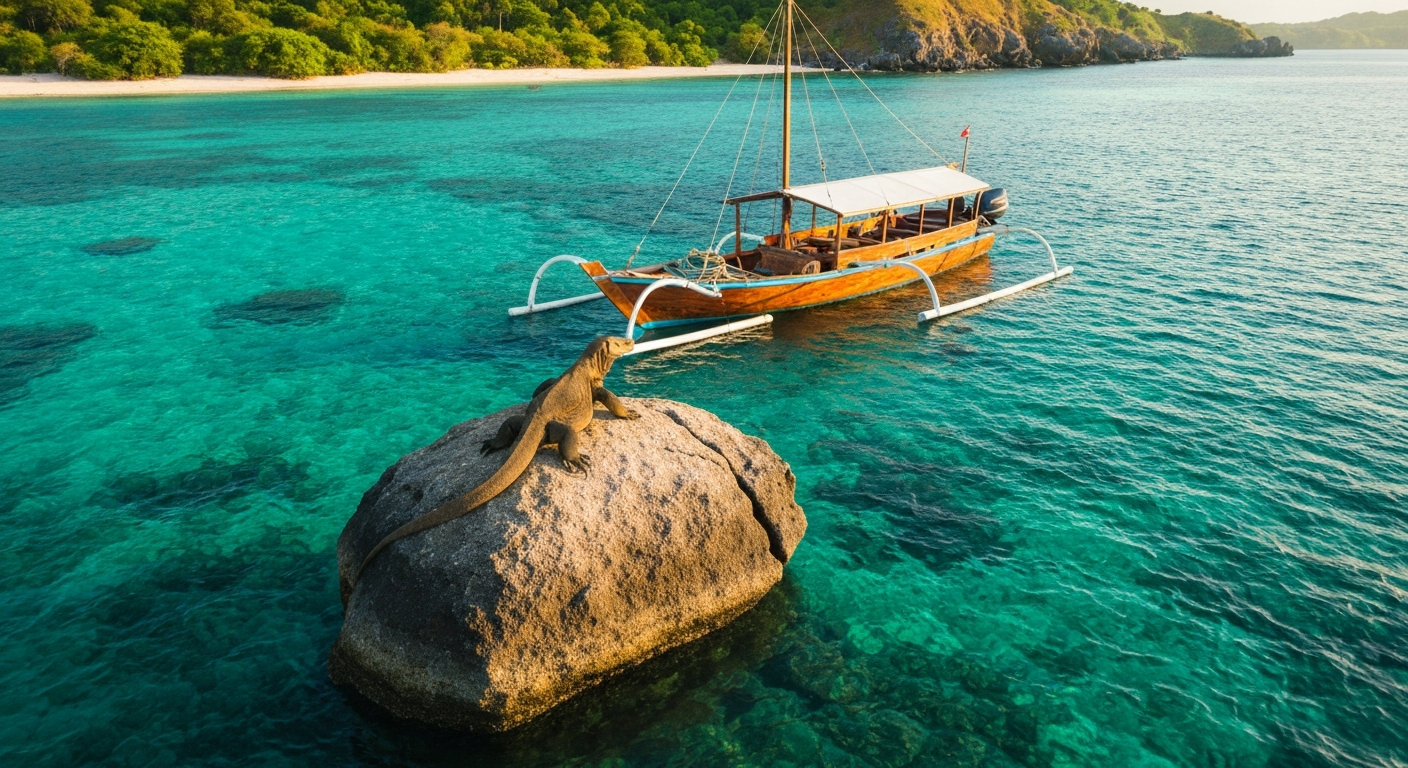
Komodo National Park stands as a premier global destination for encountering manta rays. These majestic pelagic creatures are present year-round, though specific seasons offer higher sighting probabilities due to oceanographic conditions. The park encompasses a marine area of 1,325 square kilometers, providing diverse habitats for two distinct manta ray species: the reef manta (Mobula alfredi) and the oceanic manta (Mobula birostris). A 2024 study indicated that over 90% of dedicated Komodo liveaboard trips reported multiple manta ray encounters during the peak season. The Indonesian government, through the Ministry of Marine Affairs and Fisheries, declared all manta ray species fully protected in 2014, reinforcing conservation efforts within the park’s boundaries [kkp.go.id].
Komodo’s Manta Ray Seasons Explained
Komodo National Park experiences two primary seasons that influence manta ray abundance: the dry season and the wet season. The dry season, running from April to November, is characterized by southeast winds and cooler, clearer waters. During this period, plankton blooms are driven by upwellings, particularly in the southern regions of the park. Water temperatures generally range from 24-28°C, creating optimal feeding grounds for mantas. Peak manta sightings often occur from August to October, with probabilities exceeding 85% on multi-day tours visiting known aggregation sites.
The wet season, from December to March, brings northwest winds and warmer surface waters, typically 27-30°C. While overall visibility might be slightly reduced by rainfall runoff, mantas remain present, often congregating in different areas. Northern sites tend to be more productive during this period. For instance, Manta Point (Karang Makassar) frequently offers sightings in January and February, maintaining a sighting probability of 60-75% for tours scheduled during these months, provided sea conditions allow access.
Prime Manta Ray Hotspots in Komodo National Park
Komodo National Park boasts several world-renowned locations for interacting with manta rays, catering to both snorkelers and divers. Each site offers unique characteristics and sighting probabilities. These sites are regularly included in Komodo Island sailing tour 3 days 2 nights itineraries and longer liveaboard options.
Manta Point (Karang Makassar): Located south of Komodo Island, Manta Point is a shallow sandbar with strong currents that act as a natural feeding and cleaning station. This site is accessible to snorkelers, with depths typically ranging from 2-10 meters. Average sightings here are high, especially from April to December. Over 70% of day trips to this location report manta encounters, with multiple individuals often present. The site is approximately 15 nautical miles from Labuan Bajo, requiring about 1.5-2 hours by speedboat.
Manta Alley: Situated off the southern coast of Komodo Island, Manta Alley is a renowned diving site known for its consistent manta ray activity, particularly during the dry season (June-October). This area features stronger currents and depths up to 30 meters, making it more suited for certified divers. Oceanic manta rays, which can reach wingspans of up7 meters, are frequently observed here feeding on plankton-rich waters. Dive liveaboards specifically targeting Komodo National Park liveaboard diving trips prioritize this site.
Batu Bolong: While primarily a vibrant coral reef dive site, Batu Bolong also serves as a cleaning station for manta rays, especially during periods of strong currents. Located between Komodo and Tatawa Islands, this pinnacle rises from depths of over 70 meters to just below the surface. Divers often spot mantas circulating the reef’s outer edges. Snorkelers can experience the rich marine life closer to the surface, with occasional manta fly-bys. The site is roughly 10 nautical miles from Labuan Bajo.
Maximizing Manta Ray Sightings on Your Tour
Choosing the right Komodo Island sailing tour significantly impacts your chances of encountering manta rays. Longer itineraries and dedicated liveaboard experiences offer greater flexibility to visit multiple manta hotspots across varying conditions. A Komodo Island liveaboard tour from Labuan Bajo, typically 3 days and 2 nights (3D2N) or 4 days and 3 nights (4D3N), allows for multiple visits to sites like Manta Point and Manta Alley. Shared 3D2N liveaboards, priced from USD 360-550 per person for mid-range options, often include these stops. Private charters, costing USD 3,500-7,000 for a modern mid-range Phinisi for 8-12 pax, offer even more itinerary customization.
For dive-focused travelers, a Komodo National Park liveaboard diving trip lasting 4-7 nights provides the highest probability. These tours typically include 12-20 dives and are specifically designed to visit prime manta cleaning and feeding stations. Prices for mid-range dive liveaboards are generally USD 900-1,500 per person for a 4D3N-5D4N trip. Even Komodo liveaboard for beginners snorkel only packages prioritize manta encounters, with guides adept at spotting these creatures from the surface.
Manta Ray Species and Conservation Efforts
Komodo National Park is home to two distinct species of manta rays: the reef manta (Mobula alfredi) and the oceanic manta (Mobula birostris). Reef mantas are generally smaller, with wingspans up to 5 meters, and are commonly found in coastal waters and around reefs. Oceanic mantas are larger, reaching wingspans of up to 7 meters or more, and typically inhabit open ocean environments. Both species are filter feeders, consuming vast quantities of plankton. The park’s rich waters provide abundant food sources, particularly during seasonal plankton blooms.
Indonesia has been at the forefront of manta ray conservation, implementing a nationwide ban on manta fishing in 2014. This legislation protects mantas throughout Indonesian waters, including Komodo National Park. The park, a UNESCO World Heritage site since 1991 [whc.unesco.org], enforces strict regulations to ensure responsible tourism and minimize disturbance to marine life. Visitors are encouraged to maintain a respectful distance of at least 3 meters from mantas and avoid touching them. These measures contribute to the long-term sustainability of manta populations in the region.
Manta Ray Sightings Probability: A Monthly Breakdown (2026 Projections)
Understanding the monthly variations in manta ray sightings probability helps in planning the best time for Komodo Island sailing tour. These projections are based on historical patterns and current oceanographic forecasts for 2026.
- January: Good probability (60-75%) in northern sites like Manta Point, despite wet season weather. Water temperature around 28-29°C.
- February: Similar to January, with consistent sightings at Manta Point. Some visibility reduction possible from rain.
- March: Moderate to good probability (65-80%), transitioning from wet to dry season. Conditions improving, especially towards month-end.
- April: High probability (80-90%) as dry season begins. Excellent conditions and increased plankton in some areas.
- May: Very high probability (85-95%) across various sites. Ideal month for both snorkeling and diving.
- June: Peak season for manta encounters (90-98%), particularly in southern sites like Manta Alley. Strong currents prevalent.
- July: Continues as a peak month (90-98%) for manta sightings. Water temperatures may drop slightly to 26°C.
- August: Excellent probability (85-95%), with consistent sightings in both northern and southern park areas.
- September: High probability (80-90%), maintaining strong manta presence. Clear waters often found.
- October: Good probability (75-85%), with mantas still abundant before the transition to the wet season.
- November: Moderate to good probability (65-80%), as weather patterns begin shifting. Northern sites become more active.
- December: Moderate probability (55-70%), marking the start of the wet season. Manta Point remains a key location.
Planning Your Komodo Tour for Manta Encounters
Successful manta ray encounters are a highlight of any Komodo Island sailing tour. To maximize your chances, consider the optimal seasons and tour types. Booking a 3D2N or 4D3N liveaboard tour significantly increases exposure to manta habitats compared to a single private Komodo Island speedboat tour one day. Shared liveaboards for 3D2N typically cost between USD 360-550 per person for a comfortable experience with A/C cabins. These tours usually include stops at Manta Point and Pink Beach.
For guests prioritizing diving, dedicated Komodo dive liveaboards are the best option, with 4D3N trips priced from USD 900-1,500 per person, including 8-12 dives. These boats have specialized dive guides who understand manta behavior and local conditions. Always confirm the itinerary includes specific manta sites like Manta Point or Manta Alley. Komodo National Park entrance and activity fees, approximately IDR 300,000-850,000 per person per day, are typically extra and should be factored into your budget. Advance booking, especially during peak season (May-October), is highly recommended due to limited boat capacity.
Komodo National Park offers unparalleled opportunities to witness manta rays in their natural habitat. By understanding the seasonal patterns and selecting a tour that prioritizes these magnificent creatures, you significantly enhance your chances of a memorable encounter. Whether you choose a shared liveaboard or a private charter, careful planning ensures your Komodo Island sailing tour includes these iconic marine animals. Explore our range of Komodo Island sailing tours and book your adventure today to experience the magic of Komodo’s manta rays.