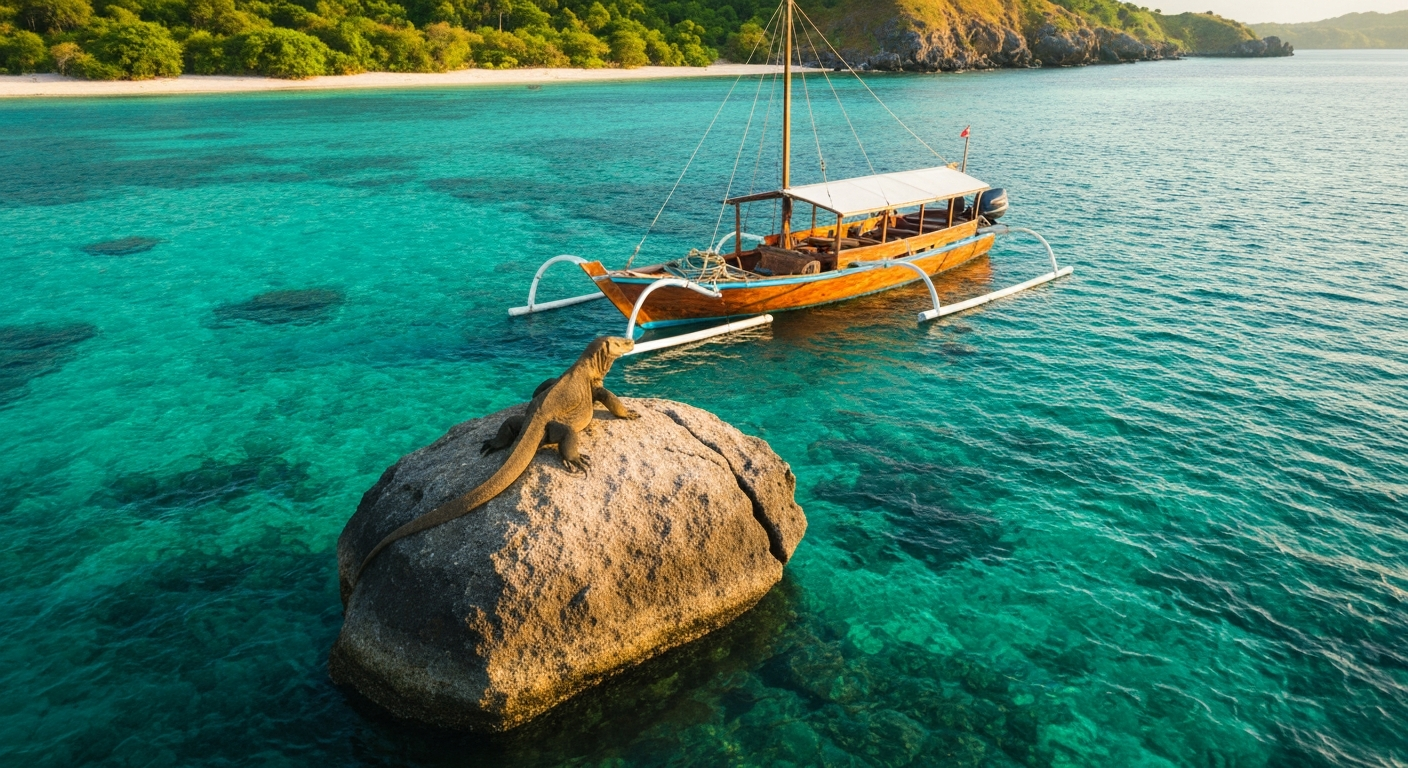
Komodo Island sailing tours provide exceptional opportunities for photography, spanning both terrestrial and marine environments. Successfully documenting the unique landscapes and diverse wildlife necessitates specific equipment and refined techniques. Komodo National Park, established in 1980 and later designated a UNESCO World Heritage Site in 1991, covers a marine and land area of approximately 1,733 square kilometers. This vast area protects iconic species, including the endemic Komodo dragon. Most visitors opt for 3-day, 2-night shared liveaboard tours, typically priced between USD 360 and USD 550 per person, to access the park’s most photogenic locations. Indonesia.travel provides extensive information on the region’s natural heritage, underscoring its photographic potential.
Essential Camera Gear for Komodo Sailing Tours
Selecting the right camera gear enhances photographic outcomes during a Komodo Island sailing tour. Many photographers utilize mirrorless cameras from brands like Sony or Canon, offering compact size and high image quality. A versatile zoom lens, such as a 24-70mm or 24-105mm equivalent, covers most landscape and portrait needs. For wildlife, a telephoto lens (e.g., 70-200mm) is beneficial for subjects like the Komodo dragon, which can measure up to 3 meters in length. Carrying at least three spare batteries ensures continuous shooting for multi-day trips, where charging points might be limited to specific times on a liveaboard. A sturdy yet lightweight travel tripod supports long exposures for sunrise or sunset shots from viewpoints like Padar Island, which involves a trek of approximately 800 steps.
Action cameras, like the GoPro Hero 12, offer ruggedness and simplicity for quick shots in wet environments. These devices record high-resolution video, up to 5.3K, and capture still images effectively. For more advanced users, a full-frame mirrorless camera paired with fast prime lenses (e.g., f/1.8 or f/2.8) excels in low-light conditions on deck or during early morning excursions. The total weight of camera equipment should be considered, especially for travelers on 2-3 week Indonesia trips who may also visit Bali. Private boat charters, costing USD 2,000–3,500 for 3D2N, often provide more space for gear than shared entry-level Phinisi boats.
Underwater Photography in Komodo National Park
Komodo National Park is a premier destination for underwater photography, boasting vibrant coral reefs and diverse marine life. A dedicated underwater camera system, comprising a camera, housing, and external strobes, produces superior results compared to unhoused cameras. High-quality underwater housings for mirrorless or DSLR cameras can range from USD 1,000 to USD 5,000, depending on the camera model and materials. External strobes (underwater flashes) are crucial for restoring color and contrast lost at depth, especially in sites like Manta Point or Batu Bolong, where visibility often exceeds 15-30 meters. Water temperatures typically range from 26-29°C (79-84°F), making extended time in the water comfortable for photographers.
For casual underwater photography, action cameras with standard waterproof cases are sufficient for capturing wide-angle scenes. Many liveaboards cater to snorkelers and divers, with dive-focused trips costing USD 900–2,500 per person for 4-7 nights. These longer tours allow photographers to explore multiple dive sites, including Castle Rock and Crystal Rock, known for strong currents and abundant pelagic species. Macro lenses are essential for documenting small subjects like nudibranchs and pygmy seahorses, while wide-angle lenses excel at reefscapes and larger marine animals such as manta rays, which can have wingspans up to 7 meters. Proper buoyancy control is paramount for minimizing disturbance to the marine environment and achieving stable shots.
Drone Photography Regulations and Best Practices
Drone photography offers unique aerial perspectives of Komodo’s islands, including Padar, Pink Beach, and Taka Makassar. Operating a drone within Komodo National Park requires specific permits from the park authorities. Failure to obtain these permits can result in significant fines and confiscation of equipment. The Indonesian Directorate General of Civil Aviation (DGCA) regulates drone operations, and their regulations outline requirements for registration and flight zones. Typical drone models used include the DJI Mavic series, offering high-resolution cameras (e.g., 4/3 CMOS sensor on Mavic 3 Pro) and extended flight times of up to 45 minutes.
Pilots must maintain visual line of sight with their drone at all times and adhere to altitude restrictions. Ethical considerations also apply: avoid flying over wildlife, especially Komodo dragons, to prevent disturbance. Respect the privacy of other visitors on the boat or at tourist sites. Launching and landing from a moving boat requires advanced piloting skills and calm sea conditions. A 3D2N private boat charter, costing USD 3,500–7,000, offers more flexibility for drone operations compared to shared tours. Always check local advisories and your tour operator’s specific drone policy before planning aerial shots. Many high-net-worth clients, chartering yachts for USD 8,000–25,000+, include drone operators as part of their crew.
Capturing Komodo Wildlife: Dragons and Marine Life
Photographing Komodo dragons requires patience and a telephoto lens to maintain a safe distance. Rangers accompany all visitors on Komodo and Rinca islands, providing guidance on safe viewing distances, typically 5-10 meters. Komodo dragons can run up to 20 km/h over short distances. Using a fast shutter speed (e.g., 1/500s or faster) freezes motion, especially if the dragon moves unexpectedly. Focus on capturing their natural behaviors rather than attempting to provoke reactions. A 4D3N tour that includes stops at both Rinca and Komodo islands offers varied opportunities for dragon encounters.
Marine life photography in Komodo National Park presents different challenges. Manta rays are often found at Manta Point, where photographers can encounter multiple individuals simultaneously. Wide-angle lenses are ideal for these large subjects. For smaller reef fish and corals, a macro lens highlights intricate details. Understanding marine animal behavior, such as cleaner stations for mantas, helps anticipate photographic moments. The park is home to over 1,000 fish species and 260 coral species, providing endless subjects. Dive-focused travelers, often solo or in pairs, spend USD 900–2,500 per person on liveaboards for 12–20 dives, maximizing their chances for marine wildlife photography.
Protecting Your Photography Equipment on a Liveaboard
Protecting photography gear from the marine environment is critical on a Komodo Island sailing tour. Saltwater spray, high humidity, and sand pose significant threats to electronics. Waterproof dry bags are essential for transporting cameras and lenses between the boat and shore. Pelican cases or similar hard cases offer robust protection against impact and moisture for more sensitive equipment. Many liveaboards, especially mid-range options priced at USD 360–550 for 3D2N, provide cabin space with air conditioning, which helps mitigate humidity. However, constant vigilance remains necessary.
Regular maintenance includes wiping down gear with a microfiber cloth after exposure to salt air. Desiccant packets placed inside camera bags absorb moisture. For underwater housings, meticulous cleaning of O-rings and lubrication before each use prevents leaks. Always carry spare O-rings and silicone grease. Batteries should be stored in individual protective cases to prevent short circuits. During transfers to smaller tenders for beach landings, ensure all gear is securely packed and waterproofed. Family-friendly Komodo sailing tours, costing USD 4,000–10,000 for private boats, often prioritize safety, including secure storage for personal belongings.
Post-Processing and Sharing Your Komodo Images
Post-processing enhances the visual impact of images captured during a Komodo Island sailing tour. Software like Adobe Lightroom or Capture One allows for adjustments to exposure, color balance, and contrast. Underwater photos often require significant color correction to compensate for blue or green casts. Using a calibrated monitor ensures accurate color representation. Batch processing saves time for large numbers of similar images, a common occurrence after multi-day tours. Many travelers on 2-3 week Indonesia trips will want to share their Komodo experiences promptly.
Developing a robust backup strategy is crucial. External hard drives provide immediate storage for raw files and edited images. Cloud storage services offer an off-site backup, protecting against physical damage or loss of equipment. Sharing platforms like Instagram, Flickr, or personal websites allow photographers to showcase their work to a wider audience. Consider creating photo albums or prints as tangible mementos of the experience. High-quality images also serve as valuable content for blog posts or travel journals. Komodo Island liveaboard tours from Labuan Bajo offer consistent Wi-Fi on some premium vessels, facilitating immediate sharing.
Komodo Photography Gear Checklist
- Mirrorless or DSLR camera body (weather-sealed recommended)
- Versatile zoom lens (e.g., 24-70mm equivalent)
- Telephoto lens (e.g., 70-200mm equivalent) for wildlife
- Underwater camera system (camera, housing, external strobes) or action camera
- Drone with spare batteries and controller
- Multiple spare camera batteries and chargers
- Portable hard drives for backup (minimum 1TB capacity)
- Waterproof dry bags (10-20L capacity)
- Microfiber cloths and lens cleaning kit
- Travel tripod (lightweight carbon fiber recommended)
- Desiccant packets
- Polarizing filter for landscapes
- Neutral Density (ND) filters for drone video
- Headlamp or small flashlight for early morning/late evening shots
- Power bank for charging small devices
A Komodo Island sailing tour offers unparalleled photographic opportunities for both seasoned professionals and enthusiastic amateurs. Careful planning and appropriate gear selection ensure you capture the unique beauty of this region. Whether documenting the ancient Komodo dragons or the vibrant underwater ecosystems, preparation is key. We offer various Komodo Island sailing tour options, including 3-day, 2-night itineraries and luxury yacht charters, catering to diverse photographic ambitions. Contact us to discuss your specific tour and photography needs.